
The three playable characters in Casualties: Unknown, what Experiment can do in the demo, and what is actually confirmed about Milky and Dune.
Casualties: Unknown Characters: Experiment, Milky and Dune
Casualties: Unknown ships with three playable characters: Experiment, Milky and Dune. The demo contains only Experiment. The other two are marked unreleased in the game's data and are planned for the full launch.
That makes character choice the one part of the game you cannot fully test before 9 November. This page separates what is confirmed from what is still unknown, and explains why Experiment's movement kit matters more than a stat sheet.
Official source: Casualties: Unknown on Steam ↗
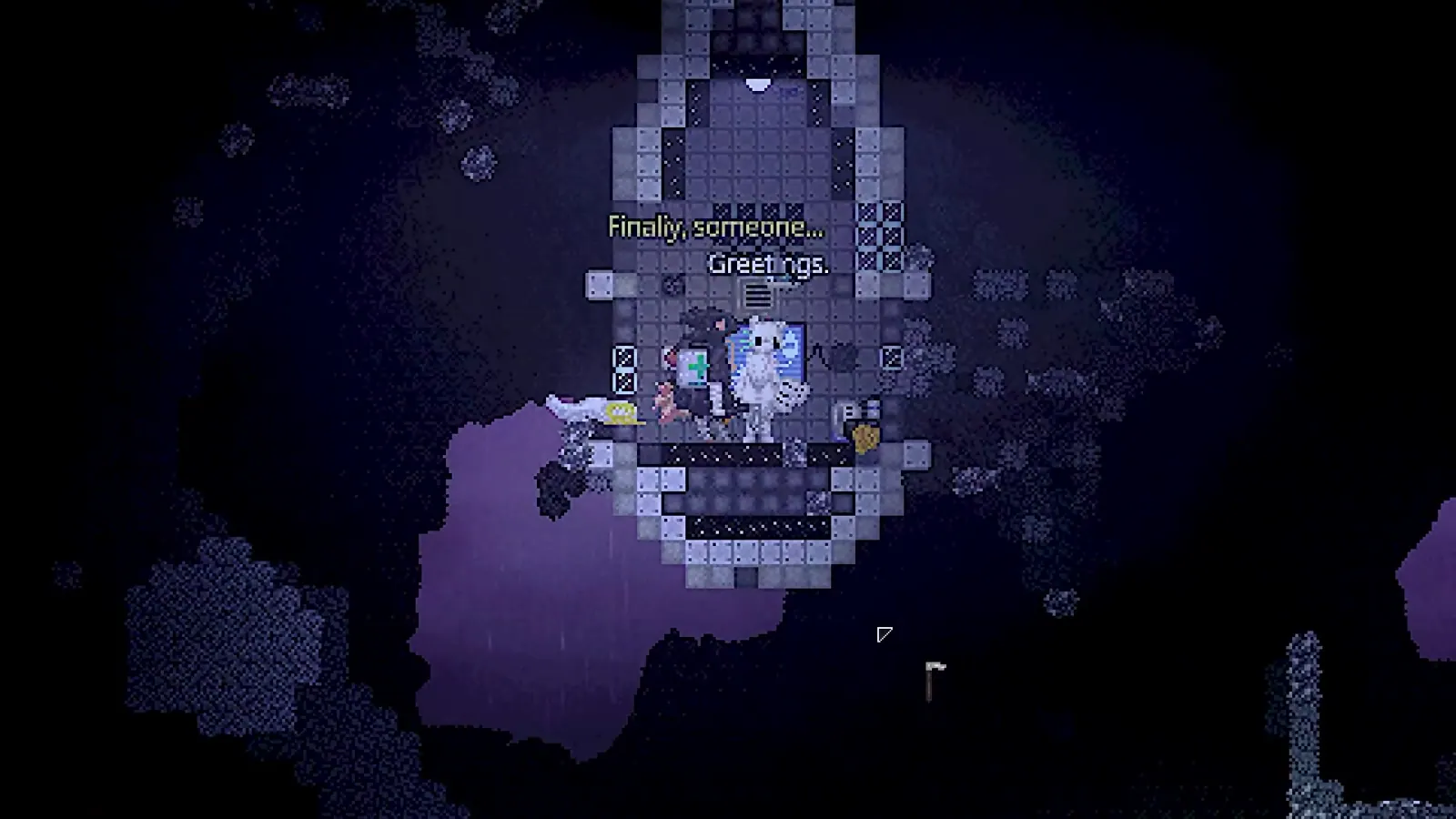
The roster
| Character | Status in demo | Role | Known differences |
|---|---|---|---|
| Experiment (SAW-01) | Playable | Baseline | Average stats, no special ability, fast regeneration |
| Milky | Unreleased | Unknown | Distinct playstyle confirmed, specifics not published |
| Dune | Unreleased | Unknown | Distinct playstyle confirmed, specifics not published |
Steam's feature list says the three characters have "distinct playstyles". It does not publish their stats. The game's wiki marks Milky and Dune as unreleased and leaves their pages empty. Anyone giving you exact Milky or Dune numbers right now is guessing.
Experiment: the baseline
Experiment is the default Sawian, designation SAW-01. Their stats are average across the board and they have no activated ability. What they do have is a movement kit that quietly solves several of the game's problems.
Movement and body
- Collision box: roughly 2 tiles wide and 6 tiles tall.
- Jump height: about 6.5 tiles (1.95 m). Sprint jumping does not add much.
- Jump distance: about 20 tiles (6 m) across a gap.
- Wall behaviour: jump off a wall, or slide down it slowly if you do not jump. The slide is a fall brake.
- Crouch: reduces height to 3 tiles, which halves the tunnelling work through a wall.
- Ragdoll crawl: press
Xto go limp and slump through gaps as narrow as 2 tiles. - Glow: Experiment emits a small amount of light, enough to see in pitch-black caves without a lantern.
That last point is easy to undervalue. A light source is a hand slot, a fuel cost and a thing enemies can see. Experiment's built-in glow means the first few layers are playable with both hands free.
Regeneration
Experiment heals muscle and skin damage without scarring, short of dismemberment, and heals broken bones much faster than a human. This is not a combat heal. It is a recovery stat: the same fracture that ends a normal run is a 20-minute setback for Experiment.
The regeneration does not replace blood, food or infection treatment. It closes tissue; it does not refill the cardiovascular system.
Why the movement kit matters
The cave is not a flat arena. It is a vertical, destructible space with ledges, water, oil and one-tile seams. Experiment's kit gives you four route tools:
- Wall jump for vertical shafts without a rope.
- Wall slide to survive a fall you did not plan.
- Crouch tunnelling to cut through a wall in half the time.
- Ragdoll crawl to reach loot behind a two-tile gap.
A character with better combat stats but worse movement would still struggle in Dried Desert, where the safe route is often above the floor. That is the argument for Experiment as a first character: not because they are strong, but because they are flexible.
What Experiment does not have
- No activated ability. No dash, no heal, no shockwave.
- No stat bonus. Strength, Resilience and Intelligence start at the baseline 10.
- No starting gear on Normal. You get an emergency light and whatever you craft.
- No immunity to the body system. Experiment bleeds, infects, fractures and faints like everyone else.
The regeneration is passive and slow. It will not save you from a Thornback in the same fight.
Milky and Dune: what is confirmed
Confirmed:
- Both are playable in the full game.
- Both have distinct playstyles from Experiment.
- Both exist in the game world as survivor NPCs even in the demo, which means you can meet them before you can play them.
- Their lore pages exist, but the gameplay pages are empty.
Not confirmed:
- Their stats, traits or starting equipment.
- Whether they have activated abilities.
- Whether they change the crafting or medical systems.
- Their unlock condition, if any.
The developers have not published a character breakdown. Treat any "Milky is the stealth character" or "Dune is the combat character" claim as speculation until the release build is out.
You cannot test them before release. Learn the body system on Experiment, then respec your knowledge rather than your skill points. The traits guide explains what carries over between characters.
Characters as NPCs
Experiment, Milky and Dune also appear as Survivors — the humanoid NPCs who trade from life-pods. In the demo you can meet the other two before they are playable. They use the same body simulation, which means they can bleed, be disfigured and die.
Killing a Survivor is possible. It gives a large amount of Trauma and Sickness, tanks your mood, and drops 66% of their inventory. It also removes a trader from that pod. The trader guide covers the economics; the short version is that murder is a bad trade.
Which character should you pick first?
Experiment, for three reasons:
- They are the only character you can practise with. The demo's five layers are built around their movement kit.
- Their regeneration forgives learning mistakes. A broken leg on Experiment is a delay; on a character without regeneration it may be a run end.
- Their kit teaches the cave. Wall jumps, slides, crouch tunnels and ragdoll crawls are core movement, not character-specific tricks.
If you already know the game, pick whichever of Milky or Dune matches your preferred playstyle once the release notes explain them. If you are new, Experiment is the tutorial that does not feel like one.
Character and build synergy
Character choice interacts with the three traits, but it does not lock you out of anything. Strength, Resilience and Intelligence are earned through play, and the caps are soft. A character with a combat kit can still craft; a character with a crafting kit can still fight.
The bigger difference is the body. A character with a smaller collision box fits through seams Experiment cannot. A character with more reach fights over ledges Experiment has to jump. Those are movement differences, and movement is the resource the cave taxes most.
Until the release build is datamined, the safe assumption is that Experiment remains the generalist and the other two push toward a specialist style.
How to test a character quickly
When the full game launches:
- Play the first layer only. Clear Gravel Lands, then return to the pod.
- Check the movement. Can the character wall jump, slide, crouch tunnel and ragdoll crawl?
- Check the body. Take a controlled fall and a single enemy hit. Compare bleed rate and recovery.
- Check the start. Note the starting supplies and the first craft the character can afford.
- Reset if needed. Character choice is at the start of a run, so a bad test costs one layer, not a campaign.
FAQ
How many characters are playable in the demo? One: Experiment.
How many at launch? Three: Experiment, Milky and Dune.
Do characters have unique abilities? Experiment has no activated ability; their kit is movement and regeneration. Milky and Dune are confirmed to have distinct playstyles, but the specifics are not published.
Can you change character mid-run? No. Character selection happens at the start of a run.
Are the characters the same as the Survivor NPCs? Yes. Experiment, Milky and Dune appear as traders in life-pods. The NPC versions can be killed.
Does character choice affect traits? It affects starting conditions and movement, not the trait system itself.
Sources and further reading
Related guides
More Casualties: Unknown Guides
Every weapon in the Casualties: Unknown demo ranked: damage, swing speed, durability, ammo and which weapon fits which layer.
How blood volume, bleeding rate, tourniquets and transfusions work in Casualties: Unknown, and the order to treat a bleeding limb.
How crafting works in Casualties: Unknown: the five tabs, Intelligence requirements, failure tiers, blueprints and the recipes worth making first.
What the free Casualties: Unknown demo includes, how long it takes, where it ends, what carries over and how to install it on Steam.
All six Casualties: Unknown presets plus the 41 custom run settings, with defaults, ranges and the options that actually change survival.
Casualties: Unknown endings explained: the confirmed story goal, the unreleased final layers, what the demo does at layer 5, and what is still speculation.
Every enemy in Casualties: Unknown, its layer, attack pattern and drops, plus the Elder Thornback fight and the traps that kill more players than monsters.
A practical triage guide for Casualties: Unknown: bleeding, infection, fractures, pain shock, fibrillation and the items that treat each condition.